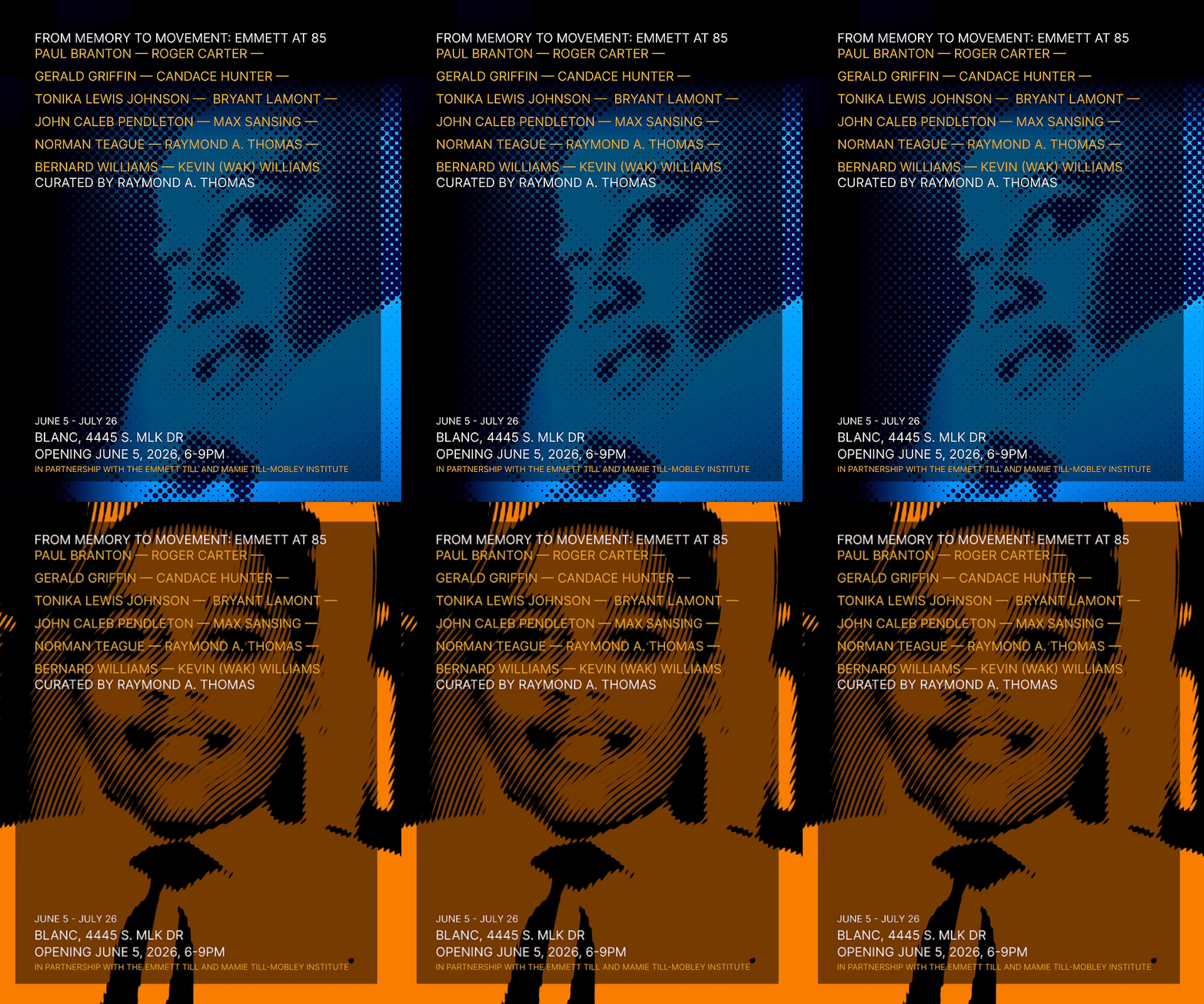
Blanc Gallery, in partnership with the Emmett Till and Mamie Till-Mobley Institute, proudly presents FROM MEMORY TO MOVEMENT: EMMETT AT 85, a powerful group art exhibition commemorating what would have been Emmett Till’s 85th birthday (b. July 25, 1941).

Curated by Raymond A. Thomas, the exhibition brings together a distinguished roster of Black Chicago-bred and Chicago-based contemporary artists whose works reflect on memory, identity, resistance, grief, and liberation. Participating artists include: Paul Branton, Roger Carter, Gerald Griffin, Candace Hunter, Tonika Lewis Johnson, Bryant Lamont, John Caleb Pendleton, Max Sansing, Norman Teague, Raymond A. Thomas, Bernard Williams, and Kevin (WAK) Williams.

FROM MEMORY TO MOVEMENT: EMMETT AT 85 serves not only as an act of remembrance but also as a call toward collective reflection and continued movement. Through painting, sculpture, photography, and mixed media, participating artists reexamine Emmett Till’s story beyond martyrdom, asking urgent questions about Black life, inheritance, historical memory, and the future of justice in America.

The exhibition honors not only Emmett Till’s life but also the powerful truth-telling of Mamie Till-Mobley, whose courageous decision to reveal the brutality inflicted upon her son became a catalyst for the Civil Rights Movement and continues to resonate through contemporary struggles for racial justice and human dignity.

Each work within the exhibition becomes a site of reckoning and revelation, bridging past and present while holding space for both devastation and joy. Together, the artists illuminate how Emmett Till’s legacy continues to shape Black cultural memory and collective resistance across generations.

“At its core, FROM MEMORY TO MOVEMENT: EMMETT AT 85 is a sacred gathering of artistic voices committed to legacy, justice, and the transformative power of art,” says curator Raymond A. Thomas. “The exhibition asks viewers not only to look back, but to see forward and imagine a future where Black life is not only grieved, but cherished, protected, and free.”
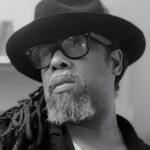
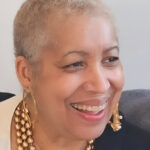
Read about the Artists:

BRYANTlamont

is an interdisciplinary artist born and raised on the South Side of Chicago. A self-taught artist, Lamont is an avid researcher of national policies and social constructs that create systems of injustice who infuses his work with critiques both of the systems of racism in America and Black resistance to them. His works are grand in scale, using mixed media to provoke the viewer to look inwardly at their own bondage to, and/or participation in, systemic racism and economic inequality.

Candace Hunter, chlee,

is a Chicago based artist who concerns herself with beauty, with history, with story telling and all things that offer protection for little brown girl’s hearts and imaginations.
Her work, including collage, painting, the written word and performance, always speaks to the wonder and joy of the little girl within her and all little girls with whom she meets.
Candace grew up two blocks from where Emmett went to elementary school and was born the same year as his murder. The cloud of his death hung over her entire life and shows up in her work as unresolved dreams of youth.

John Caleb Pendleton

John Caleb Pendleton’s first memories of engaging with raw materials are gathering sawdust in random water bottles and picking flowers in the churchyard. He was born in 1992, raised in Grove Hill, Alabama. John Caleb grew up learning the basics of woodworking in his father’s cabinet shop and the resourcefulness of creativity by watching his mother plant flowers, make costumes, and create decorations for children’s events. Using his hands to make beauty for others has been an example in his life from the beginning.

In tandem with this creative upbringing was also a deeply religious indoctrination that culminated with studying christian theology in college. All of this learning led to many questions that could not be sufficiently answered by the spaces which taught him. And albeit lots of wounds, the religious learning laid a foundation for deeper questions about personal and collective grief that he now seeks to rephrase and ask more gently through his art.

The loss of his sister (2003) and best friend (2012) have been two of his most formative experiences, and after 16 years in Chicago, he sees and understands the collective grief that Black northerners feel in relation to the general disconnection from the land that came with The Great Migration.

Although he never imagined pursuing an art career, his disconnection from the land led him to begin working with florals. Designing flowers at home quickly transformed into large scale floral installations that highlight Black stories. And from these installations, he began making mixed media work focused on his personal grief.

John Caleb Pendleton is an emerging artist who has had art exhibited at The South Side Community Art Center, The Driehaus Museum, Indianapolis Museum of Art, Saugatuck Center for the Arts, and salonlb.

Bernard Williams

is an established artist based in Chicago, IL and working in painting, sculpture, installation, and public art. He holds a BFA from the University of Illinois at Urbana-Champaign and an MFA from Northwestern University. His work has been exhibited in galleries and museums across the U.S., and has been represented by the N’Namdi Gallery in Detroit, the Thomas McCormick Gallery in Chicago, and the Ethan Cohen Gallery in New York. Williams has received recognition
both regionally and nationally, including grants from the Illinois Arts Council, Artadia in New York in 2001, The Meier Foundation in Chicago in 2013, and The Adolph and Esther Gottlieb Foundation in New York in 2015. He has completed artist residencies at the Skowhegan School of Painting & Sculpture, The Fine Arts WorkCenter in Provincetown, MA., and the International Studio andCuratorial Program in New York in 2013.

The artist began painting outdoor murals in the early 1990’s with the Chicago Public Art Group. While continuing with CPAG, Williams has added outdoor sculpture to his practice. In recents years he has created several outdoor steel sculptures in Chicago, and completed the Black Tractor Project at the Arts Club of Chicago 2019. In November 2020-May 2021 he debuted a large sculptural work in the “Long Dream” group exhibition at the Museum of Contemporary Art in Chicago. In 2021 the artist has won two significant outdoor Commissions: The Naomi Anderson installation for Michigan City, Indiana, and in 2023 a large steel sculpture was installed at Nate Manilow Sculpture Park at Govenors State University in University Park, IL. In 2026 the artist is in the design
phase for a gateway sculpture to be installed in 2027 in Chicago.

The artist states, "Public Art has become one of my primary modes of practice. I seek to place outdoor works in cities across America. I am built for this work! A well designed public sculpture has the ability to change a community. The work could remain in place for 50 years ormore and speak to thousands of viewers. I want my works to be embraced and loved by those who commission it and I seek to give voice tocommunities and stakeholders who entrust this work to me."

Paul Branton

was born in 1973 in Chicago. He was influenced at an early age by the sights & sounds of the South Side’s urban environment. Writing short stories & putting on plays with his sister quickly became a passion and a means of expressing himself. It was this passion that guided his education, which ultimately guided his career. Choosing visual art as his main focus, he entered Millikin University in Decatur, Illinois, majoring in Commercial Art with a strong emphasis in painting. It was at Millikin where he also discovered a love for poetry, a strong desire for painting, eventually putting on a one man art exhibit displaying his works. During these same years, he also helped his college buddy Skee Skinner with several student film projects, opening up another doorway from which to express himself. Not only taking on writing & production credits, Paul spent much of his time on both sides of the camera playing supporting and lead roles. He recently combined the two art forms by creating a series of paintings for the feature film Pieces of a Dream, in which he also portrayed a main character. Also merging visual art and poetry, Paul put together the upcoming coffee table book To Dream In Colour. The art of Paul Branton is/has been exhibited throughout Illinois, including Millikin University, Elmhurst Museum, South Side Community Art Center, DuSable Museum, Gallery Guichard, University of Illinois at Chicago, Gallery D’Estee, Chicago State University, Epiphany Gallery, Zhou B Gallery, Phoenix Gallery, St. Xavier University, NYCH Gallery, Chicago Truborn, Legendary Gallery, Galleryna 19 and Hyde Park Art Center . His work hangs in the homes of private owners from New York to Los Angeles

Raymond A. Thomas

The desire to create has consumed multi-disciplinary artistcurator Raymond A. Thomas for as long as he can
remember. Today, this St. Louis native has cultivated his passion into a vibrant artistic practice that continues to expand
with purpose and daring. Thomas received a merit scholarship in 1984 to attend the prestigious School of the Art
Institute of Chicago where he studied painting, filmmaking and graphic design. In 1988, soon after graduating and
receiving his BFA in visual communications, Thomas was hired by Chicago-based Johnson Publishing Company Inc.
where he served as art director and creative manager for over 23-years. He also continued his life-long missions of
mentoring youth and creating art with showings of his studio works in Chicago and galleries nation-wide. In 2000,
Thomas wrote, directed and produced his first film project 12 MINUTES. The 30-minute film short was an official
selection to over 20 film festivals worldwide, winning numerous awards and honors. The film, which deals with the issues
of mass incarceration and the death penalty, continues to be used in community arts engagement efforts with screenings
in correctional facilities nationwide. Thomas has written over a half dozen feature screenplays several of which have been
optioned by major motion picture studios. In 2013, Thomas won an EMMY for serving as an associate producer on the
documentary COLORBLIND: Rethinking Race, which aired on television station WYCC in Chicago. Besides his film
and art practices, Thomas has also been working as a freelance creative for nearly 30 years, working with national and
global brands like AT&T. Thomas has served as a board and committee member for many noted Chicago art institutions
including: Little Black Pearl, Black Harvest Film Festival, Chicago International Film Festival Black
Perspectives Sidebar, Chicago Public Art Group and South Side Community Art Center (SSCAC). Thomas also
served as artistic/creative director for SSCAC from 2012-2014 curating some of the Centers most provocative and wellattended
art exhibitions in its 75-year history. In 2013 his piece “The Conversion of Mary Magdalene” won “best
painting” and “best of show” awards at the Black Creativity juried art exhibition held the Museum of Science and
industry in Chicago. Thomas is a four-time recipient (2014, 2015, 2017, 2021) of the Individual Arts Program
Creative Projects Grant from the City of Chicago's Department of Cultural Affairs & Special Events Grants Department.
In 2015 The Burnham Wildlife Corridor Curatorial Committee, Chicago Park District and The Field Museum funding for
Sankofa for the Earth awarded Thomas, along with 2 other artists, a public art project to be installed on the Chicago
lakefront in 2016. Thomas is currently the art director for the Jazz Institute of Chicago as well as the creative director for
the Emmett Till and Mamie Till-Mobley Institute. He is also a resident artist at the Bronzeville Artist Lofts in Chicago.
www.raymondathomasstudios.com
.

Roger J. Carter

Roger J. Carter brings a powerful, playful, and deeply symbolic dimension to the exhibition through his mixed-media portraits constructed from toys, Legos, and found objects. His practice fuses the accessibility of childhood materials with urgent social commentary. Carter transforms familiar playthings—plastic soldiers, building blocks, action figures—into textured reliefs that interrogate themes of Black identity, resilience, power, and representation.
His work often reimagines iconic Black cultural figures—activists, artists, thinkers—rendering them with layered, sculptural surfaces that shift between nostalgia, disruption, and reverence. The colorful compositions seduce the viewer in, only to reveal complex tensions: who is seen, who is heard, what histories get built or erased. Carter’s aesthetic bridges pop culture and fine art, casting toys as agents in visual storytelling.
He recently was spotlighted in The New Yorker for a feature titled “Roger J. Carter Rebel Revolutionary”, profiling a short film about his process and the philosophical underpinnings of his work. The New Yorker piece frames Carter’s portraits as battlegrounds of memory and identity, illuminating how small, everyday objects can speak to larger struggles for visibility and self-definition.
Carter’s work has been featured in national exhibitions and critical forums, earning recognition for its originality, technical mastery, and capacity to spark dialogue between object, image, and meaning. In the context of the fair, his portraits invite viewers to reconsider what is playful, what is serious—and how the personal is always political.

Tonika Lewis Johnson

is a photographer, social justice artist, and 2025 MacArthur Fellow whose participatory art projects illuminate how systemic disinvestment and segregation shape and impact our lives and neighborhoods while empowering residents to confront and disrupt these inequities. Her seminal project, Folded Map, visually and physically brings together residents—known as “map twins”—who live on the same street name but miles apart on Chicago’s racially and economically divided North and South Sides, creating space for in-person conversations that reveal both structural inequality and personal commonality. Johnson’s multidisciplinary practice spans photography, mapping, multimedia storytelling, and public art, and includes public installations such as Inequity for Sale and reparative, resident-driven initiatives like UnBlocked Englewood. Her work has been exhibited at major cultural institutions nationwide. She holds a BA from Columbia College Chicago and an MBA from National-Lewis University and is a co-founder of the Englewood Arts Collective.